
Namahage Sedo Festival 2027 in Oga, Japan: Dates, Tickets and Access
Masanori Kato
Akita no Mikata
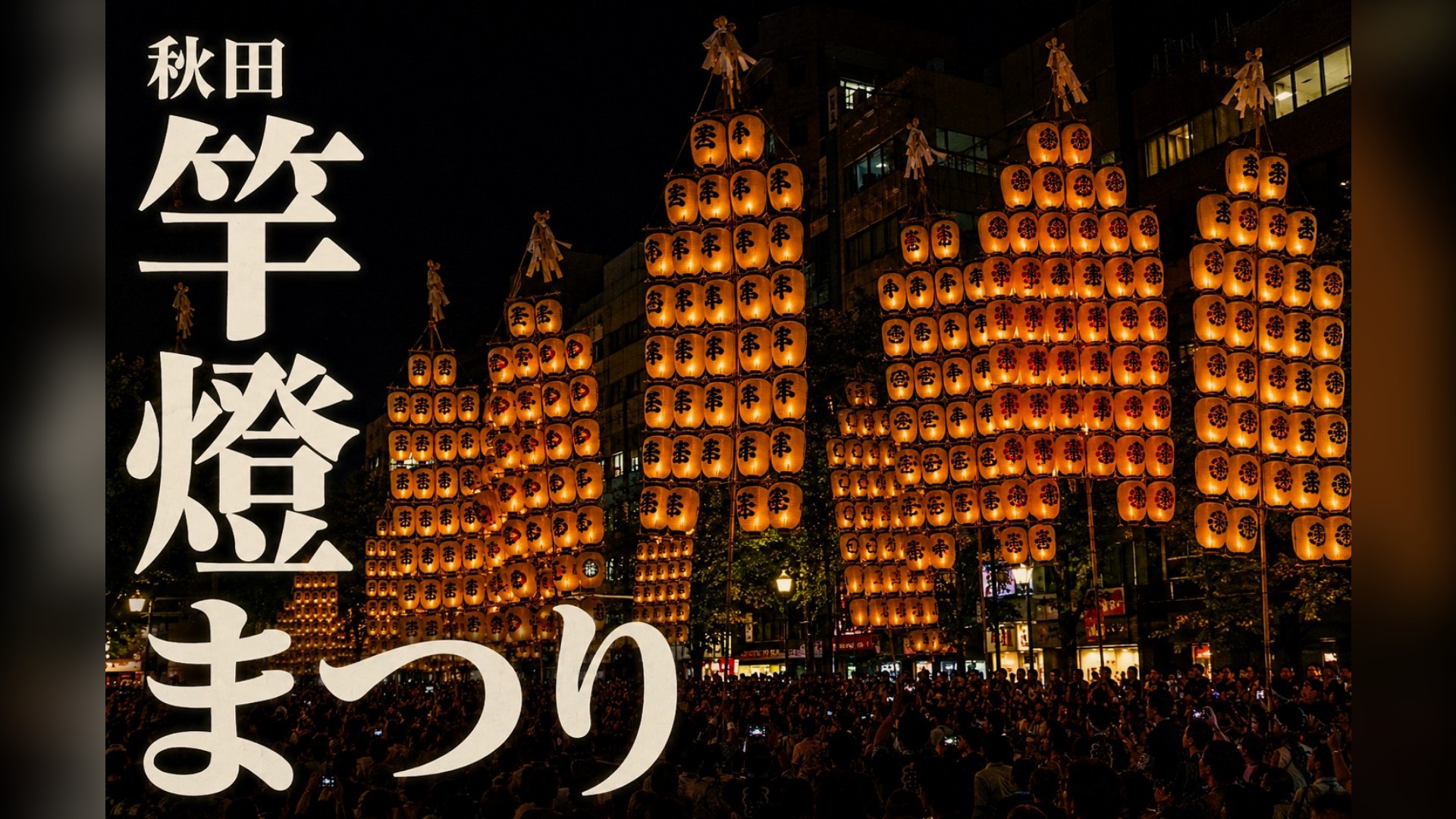
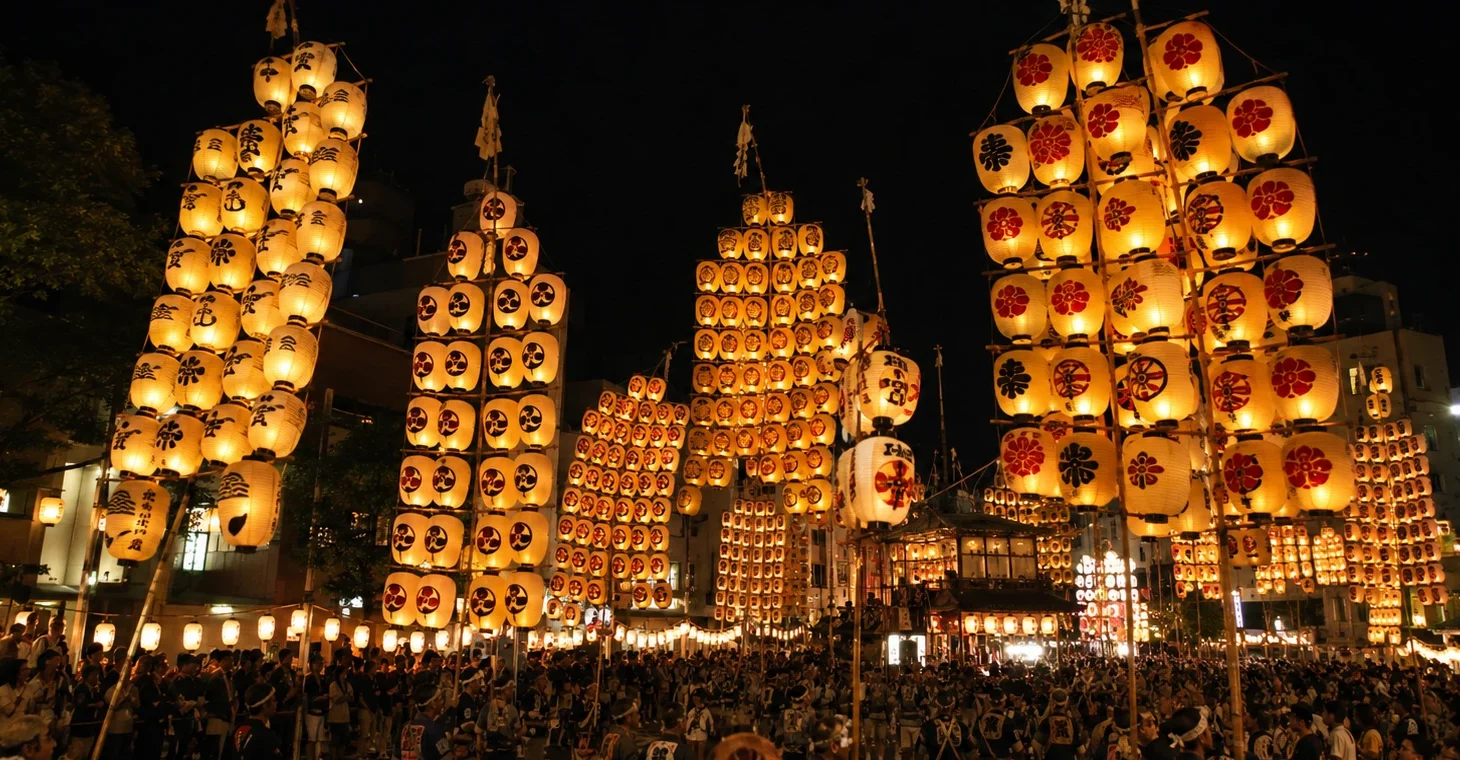
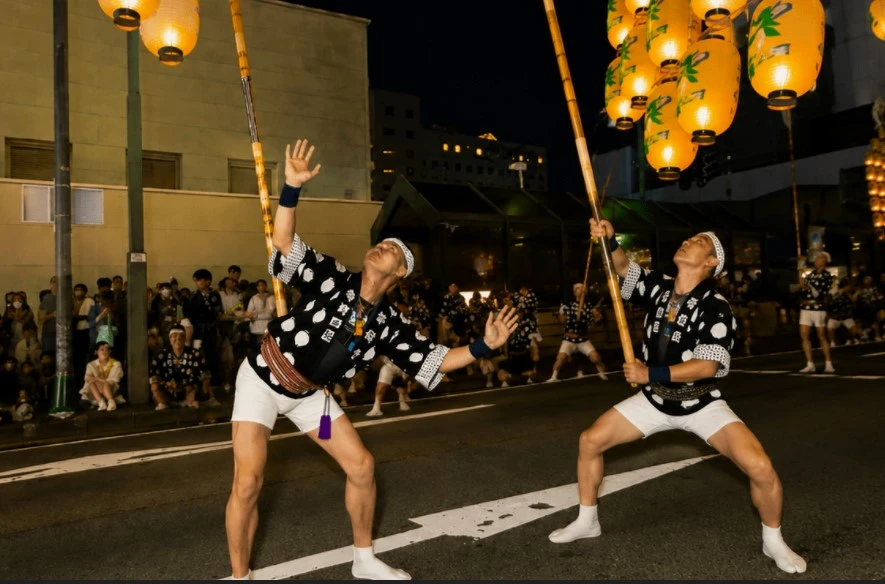
Every summer, from August 3 to 6, the main street of Akita City in northern Japan fills with about 280 tall bamboo poles hung with glowing paper lanterns. Performers balance these poles, some as heavy as 50 kg, on their palms, foreheads, shoulders and even their lower backs, while drums and flutes play and the crowd shouts along. This is the Akita Kanto Festival (Kanto Matsuri), Akita’s famous lantern festival and one of the three great summer festivals of Japan’s Tohoku region.
I live in Akita Prefecture, and Kanto is the event people here look forward to all year. In this guide I’ll explain when and where it happens, what to watch for, whether you need a paid seat, how to get to Akita from Tokyo, and a few local tips for visitors from overseas. The dates are the same every year, so you can use this guide to plan any summer trip.
Akita Kanto Festival: the essentials
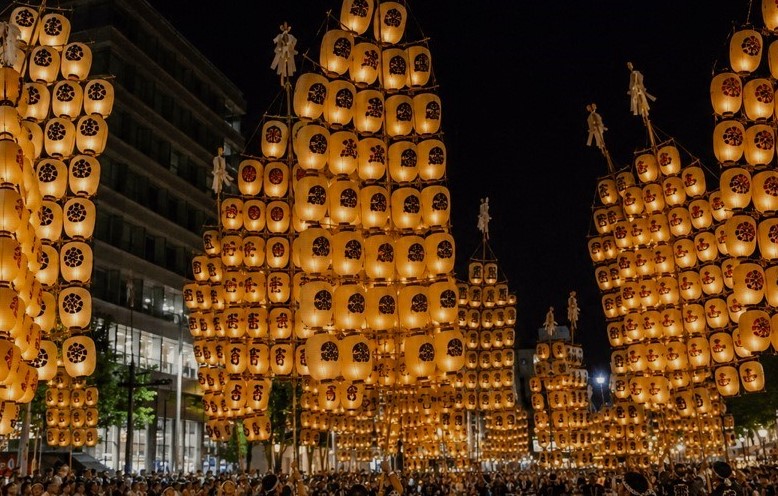
Kanto (竿燈, pronounced “kan-toh”) means “pole lantern.” Each kanto is a long bamboo pole with crossbars hung with dozens of paper lanterns. Together with the Aomori Nebuta Festival and the Sendai Tanabata Festival, it is counted among the three great summer festivals of Tohoku, and it is designated an Important Intangible Folk Cultural Property of Japan.
The festival is a prayer to drive away summer illness and bad luck and to ask for a good harvest. The shape of a kanto is meant to look like a stalk of rice heavy with grain, and the lanterns are the grains. When hundreds of them sway together at night, the street really does look like a field of golden rice.
Kanto grew out of neburi nagashi, an older local custom: people decorated bamboo branches with paper strips bearing their wishes, paraded through town, and floated them down the river to wash away misfortune. In the mid-1700s, as candles became common, this custom combined with the tradition of hanging tall lanterns for Obon, and the lantern pole was born. The oldest surviving record, a travel diary from 1789, already describes long poles with many lights carried through the streets to the sound of drums, as a custom unique to Akita.
Japan has many summer festivals, but Kanto stands out because the show is pure human skill: no floats or machines, just performers balancing towering lantern poles by hand. It is also easy to watch. The whole festival happens on one long avenue near the station, and you can see it for free.
Kanto also fits neatly into a Tohoku summer festival trip. The Aomori Nebuta Festival (August 2–7) and the Sendai Tanabata Festival (August 6–8) take place in the same week, so many travelers see two or all three. Akita is about 2 hours 40 minutes from Aomori by limited express train, and a little over 2 hours from Sendai on the Akita Shinkansen.
The Akita Kanto Festival is held from August 3 to 6 every year, whatever the day of the week. There are two main parts, and they take place in different places.
Exact times can change from year to year, so check the schedule on the official website (English) before you go. In recent years the organizers have also added new events, such as a drone show in 2026.
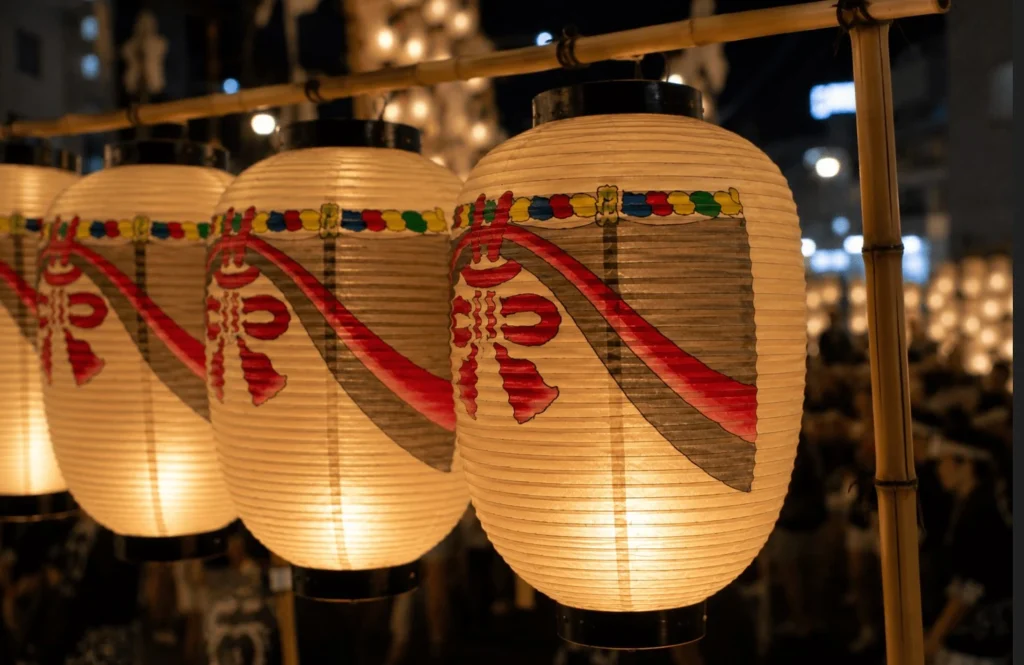
Kanto come in four sizes. Performers start as children with the small ones and work their way up to the biggest as they gain strength and skill, so you will see kids performing next to adults.
| Type | Length | Weight | Lanterns |
| Owaka (largest) | about 12 m | about 50 kg | 46 |
| Chuwaka | about 9 m | about 30 kg | 46 |
| Kowaka | about 7 m | about 15 kg | 24 |
| Yowaka (smallest) | about 5 m | about 5 kg | 24 |
Each lantern carries the crest of the neighborhood or group that owns the pole. Comparing the crests is a fun way to tell the teams apart.
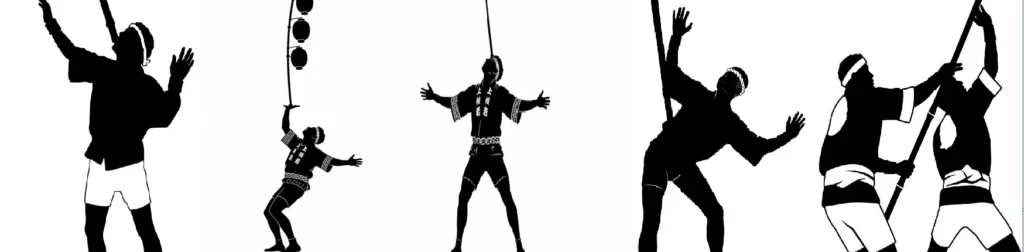
What makes Kanto special is the skill of the performers, called sashite. As the pole grows taller, more bamboo sections are added, and it begins to bend and sway in the wind. There are five basic techniques:
The music is played on drums and flutes. You will hear one tune while the teams march into place and another during the performance, and the crowd joins in with the call “Dokkoisho, dokkoisho!” Watching for even a few minutes makes it clear why the performers train all year.
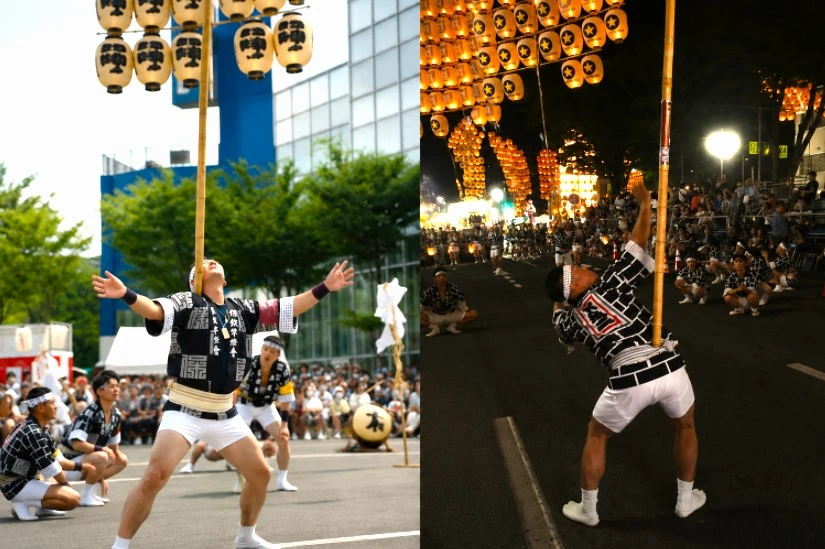
Without the lanterns lit, you can watch the performers’ hands, footwork and the bend of the pole up close. It is a calmer, more focused atmosphere, and seeing how the techniques work in daylight makes the night performance even more impressive.
More than 70 groups, from 38 neighborhoods plus companies and schools, take part. At the signal, about 280 kanto carrying roughly 10,000 lit lanterns rise into the sky at once. This moment is the one everyone waits for, so be in position before the start.
Right after the night performance comes fureai (“getting in touch”) time, about 10–15 minutes when spectators can walk up to the poles, take photos with the performers, and sometimes try holding a kanto with help. If you want to feel how heavy one really is, this is your chance. Afterwards, look out for teams carrying their poles back to their neighborhoods. They sometimes perform again along the way.
You do not need a ticket to enjoy Kanto. Anyone can stand along the sidewalks of Kanto Odori Avenue for free. Paid seats are set up on the median strip in the middle of the 800-meter avenue, in raised rows, so you can see over the crowd and sit comfortably.
| Seat (2026 prices) | Price |
| Masu box (up to 6 people) | ¥28,000 per box |
| S seat (top raised rows) | ¥4,500 |
| A seat (other raised rows / folding chairs) | ¥4,000 |
| B seat (benches) | ¥3,500 |
Adults and children who need a seat pay the same price. Infants who sit on a lap are free. In 2026, group bookings opened in mid-April and individual bookings in mid-May, and boxes were assigned by lottery. Seats sell out, so decide early.
Booking from overseas: the main booking pages are in Japanese. The official English site has a reservation page that takes requests by email, with tickets collected at the festival office. Note that the prices shown there are older than the current Japanese ones, so confirm the details when you write. Some travel agencies and tour sites also sell seat packages with English support, at a higher price.
Kanto Odori Avenue is within walking distance of JR Akita Station, so you won’t need a car once you’re in the city.
Book your hotel early. Rooms in Akita City are in very high demand from August 3 to 6, and many sell out months ahead. If the city is full, you can stay in another town on the Akita Shinkansen line, such as Omagari or Kakunodate, and ride in for the evening. Just check the time of the last train back before you decide, because the festival ends after 8:30 pm.
During the festival, the Akita Kanto Yatai Village food area opens near the venue, serving local dishes such as kiritanpo (grilled rice sticks in hot pot), Inaniwa udon noodles and Hinai-jidori chicken. Look for babahera ice cream, a sherbet-like treat that local vendors shape into a rose on a cone. Eat early to avoid the busiest time, and carry some cash, since not every stall takes cards.
Early August in Akita is hot and humid, even in the evening, and the crowd makes it feel warmer. I recommend bringing:
If your summer trip includes hiking or walks in the mountains, read my bear safety guide for Akita before you go. For more seasons and events, see the Akita travel guide.
| Dates | August 3–6 every year |
| Night performance | About 7:10–8:35 pm, Kanto Odori Avenue (free to watch) |
| Daytime competition | August 4–6, about 9:00 am–3:40 pm, Area Nakaichi |
| Nearest station | JR Akita Station (about 10 minutes on foot) |
| Paid seats | ¥3,500–4,500 per person, boxes ¥28,000 (2026 prices) |
| Official website | kantou.gr.jp/english |
When is the Akita Kanto Festival in 2027?
It is held from August 3 to 6 every year, so in 2027 it runs from Tuesday, August 3 to Friday, August 6. Check the official site for the exact schedule.
Is the festival free?
Yes. Watching from the sidewalks is free. Only the reserved seats on the median strip cost money.
Can I see Kanto and the Aomori Nebuta Festival on the same trip?
Yes. Nebuta runs from August 2 to 7, so you can spend one or two nights in each city. Many travelers also add the Sendai Tanabata Festival (August 6–8) to see all three of Tohoku’s great summer festivals in one week.
What happens if it rains?
The festival is generally held in the rain, though the performance may be shortened depending on the weather. Strong wind is a bigger problem than rain for the tall poles.
Can women take part?
The pole performers have traditionally been men, but more women now take part, especially as musicians. Everyone is welcome to watch.
Is it OK to bring children?
Yes. Kids love fureai time and the food stalls. The crowds get heavy in the evening, so agree on a meeting point in case you get separated, and watch out for the heat.
The Akita Kanto Festival turns central Akita City into a sea of lanterns for four nights every August, and it is one of the most impressive summer festivals in Japan. You can enjoy it for free, but book your hotel early, arrive before the roads close at 6:15 pm, and stay for fureai time to touch a kanto yourself. If you can, watch the daytime competition too. Once you’ve seen how hard the techniques are, the night performance becomes unforgettable.